Game profile
The Legend of Zelda: Breath of the Wild
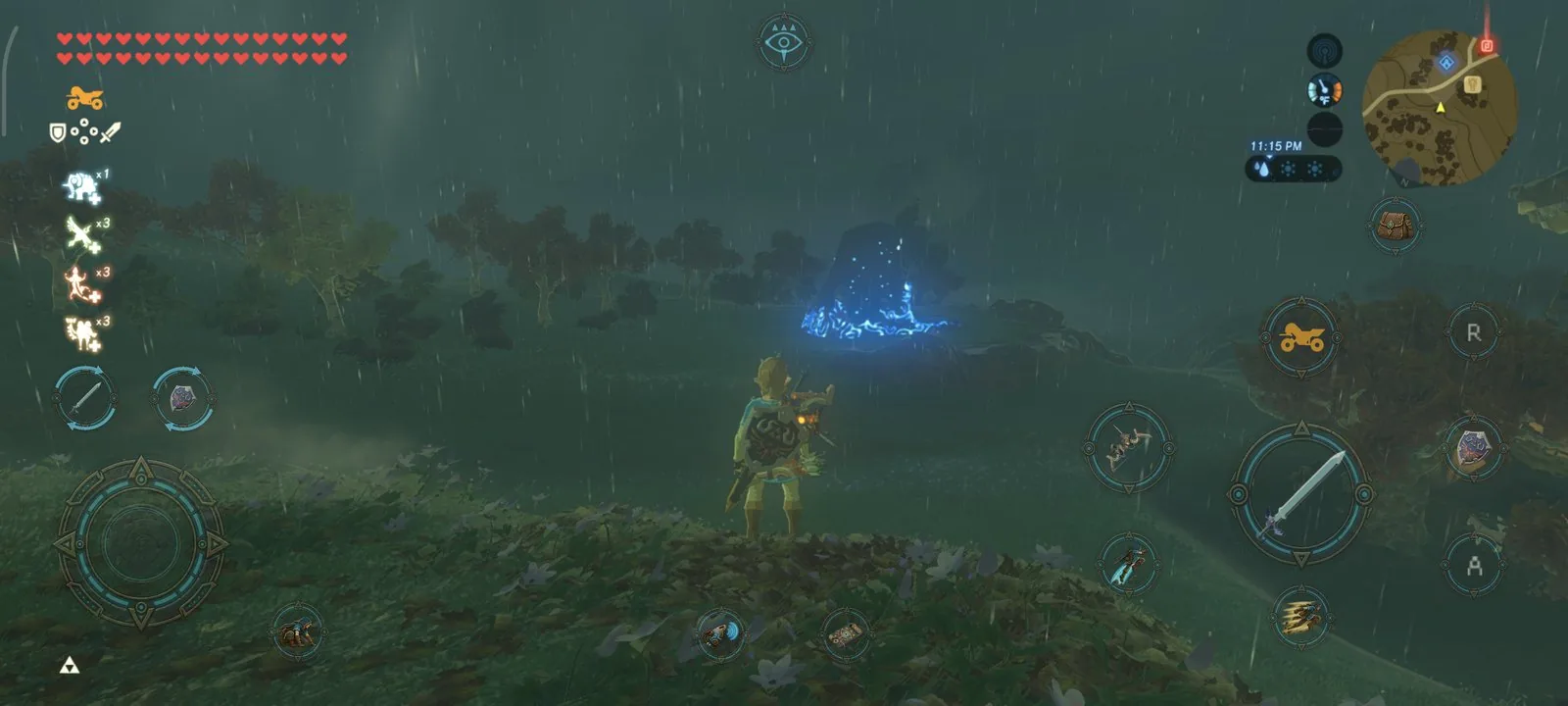
The Legend of Zelda: Breath of the Wild is a critically acclaimed 2017 action-adventure game developed by Nintendo EPD. Set near the conclusion of the overarching franchise timeline in the vast kingdom of Hyrule, the experience follows an amnesiac warrior named Link who awakens from a century-long slumber. Tasked with preventing the ultimate destruction of the world by the malevolent entity known as Calamity Ganon, Link must set out to save Princess Zelda. The title rethinks traditional conventions established by earlier installments in the series by embracing an entirely unstructured and experimental design philosophy.
Rather than forcing users down a linear path, the adventure encourages uninhibited exploration across its expansive sandbox. Players can complete objectives, solve intricate puzzles, gather resources, and tackle the core narrative in any order they choose. This freedom is supported by deep environmental systems that reward curiosity and creative problem-solving. Widely considered one of the greatest video games ever made, the release became a massive commercial success, breaking launch sales records and cementing its legacy as a landmark achievement in modern game design.
Gameplay
In Breath of the Wild, players control Link from a third-person perspective as he navigates the kingdom of Hyrule. The experience introduces a robust physics and chemistry engine that fundamentally alters how interactions function within the world. For instance, metal objects attract lightning during storms, fire spreads naturally through grassy fields, and various elements can be combined to overcome obstacles. Link is capable of running, climbing, swimming, and gliding across the landscape, though these physical feats are limited by a stamina meter. Throughout his journey, players must manage degrading weapons, cook food and elixirs for vital buffs, and utilize the magical Sheikah Slate to manipulate the environment with abilities like remote bombs and time-stopping stasis.
Exploration is heavily rewarded through shrines, towers, and hidden collectibles. Activating towers reveals surrounding territory on the map, while shrines challenge players with puzzle rooms and combat trials that yield spirit orbs used to upgrade health or stamina. Additional challenges include freeing giant mechanical creatures known as Divine Beasts and hunting down tiny Korok puzzles scattered across the terrain. Towns, stables, and traveling merchants offer quests, shops, and hints, while optional Amiibo scanning grants bonus items and classic mounts.
Story and Setting
The game is set in a fallen kingdom where ancient advanced technologies have long since been buried beneath a medieval society. Ten thousand years prior to the events of the game, the civilization of Hyrule successfully fended off Calamity Ganon using colossal mechanical guardians and animalistic machines called Divine Beasts, guided by a princess with divine blood and her appointed knight. When the ancient evil returns in the present era, it corrupts these machines, slays the kingdom's Champions, and leaves the land in ruins.
Link awakens a century later inside the Shrine of Resurrection with no memory of his past life. Guided by the lingering spirit of King Rhoam, he learns of his past failure and the immense sacrifice made by Princess Zelda, who used her remaining power to seal Ganon away. To restore peace, Link must reclaim his lost memories, unite with the spirits of the fallen Champions, master the legendary Master Sword, and ultimately rescue Zelda from her eternal containment.
Development
Development on the project spanned five years under the guidance of director Hidemaro Fujibayashi and producer Eiji Aonuma, immediately following the completion of Skyward Sword. The team sought to completely rethink foundational series conventions, integrating detailed physical systems and drawing mechanical inspiration from the original 1986 classic, Shadow of the Colossus, and Skyrim. Monolith Soft lent their open-world design expertise to help construct Hyrule's sweeping landscapes and topography.
Release and Platforms
The game launched on March 3, 2017, serving simultaneously as a major launch title for the Nintendo Switch and the final first-party published release for the Wii U hardware. It immediately shattered sales records for Nintendo, paving the way for millions of copies sold over the subsequent years and spawning a direct sequel as well as spinoff titles.
Reception
Upon release, Breath of the Wild received universal acclaim from critics, who praised its breathtaking open-world design, unprecedented attention to detail, and emergent gameplay loop, despite minor criticisms regarding technical performance. It dominated year-end award ceremonies, capturing prestigious honors including Game of the Year at both The Game Awards and the D.I.C.E. Awards. Its monumental influence is regularly cited by industry developers, setting a new benchmark for open-world exploration.
Ports, Remakes and Fan Projects
The title has continued to expand its reach through official hardware updates and enthusiast-driven efforts alike. An enhanced version tailored for newer Nintendo hardware launched in June 2025, bringing features such as audio guides from Princess Zelda via the Nintendo Switch App. Meanwhile, fan communities continue exploring alternative ways to experience the classic adventure, as highlighted by our news coverage detailing community-driven recompilation efforts bringing the game to Android devices.
Where to Play It Today
Players can experience the adventure on its native Nintendo Switch hardware, enjoy the enhanced features included in the June 2025 Nintendo Switch 2 release, or track down physical and digital copies for the original Wii U console.