Game profile
The Legend of Zelda: Ocarina of Time
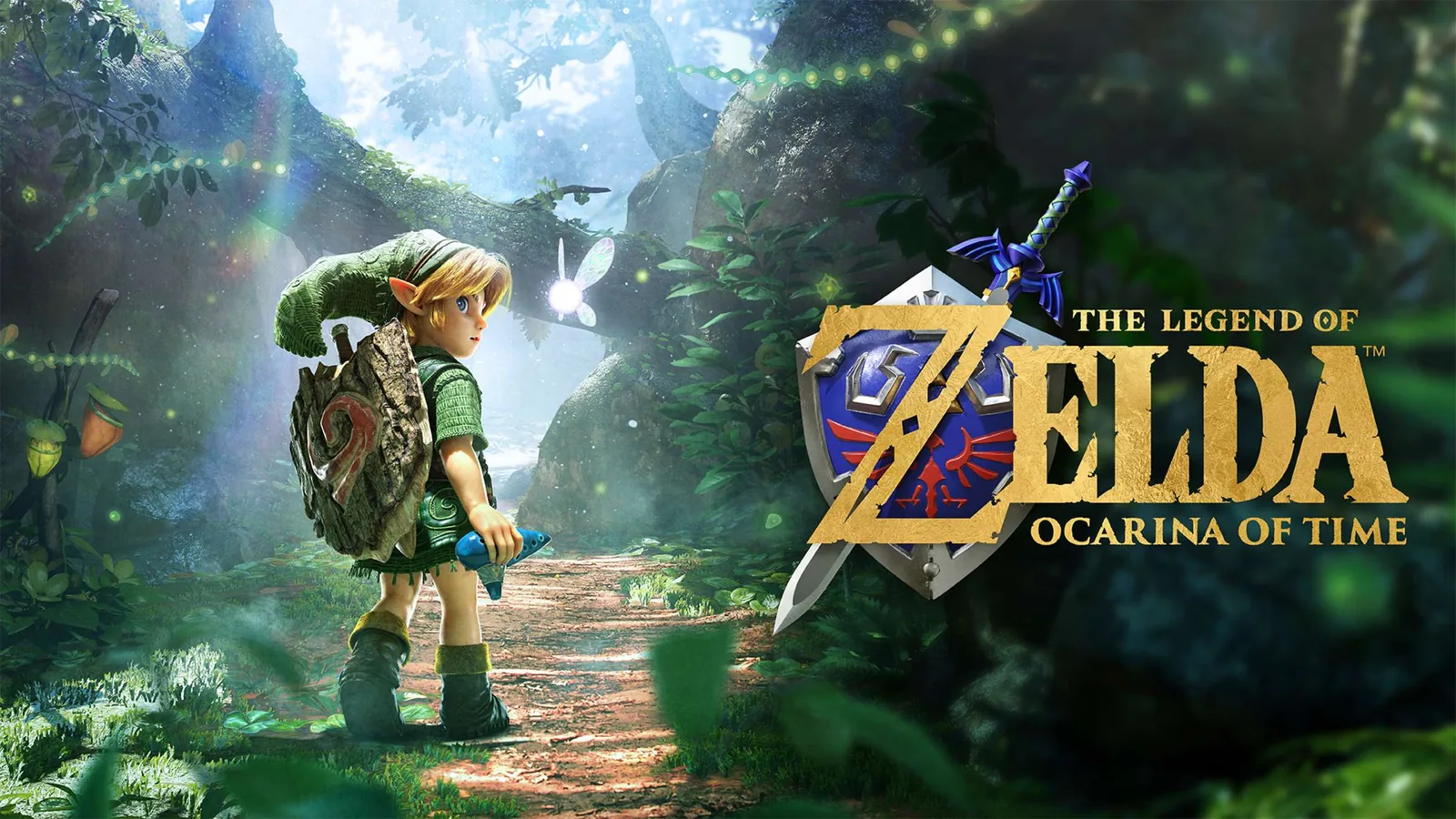
The Legend of Zelda: Ocarina of Time is a legendary 3D action-adventure game initially released by Nintendo in late 1998 for the Nintendo 64 console. Serving as the groundbreaking debut of the beloved franchise in three-dimensional space, the title revolutionized how players interact with digital environments. It introduced foundational camera control and movement mechanics that went on to define modern third-person adventure titles across the entire video game industry.
Set within the fantasy kingdom of Hyrule, the experience follows a young boy named Link who embarks on an epic quest to prevent the villainous King of the Gerudo, Ganondorf, from seizing godlike power. By manipulating time itself with a magical instrument, players navigate complex dungeons, solve musical puzzles, and explore expansive landscapes. Ocarina of Time achieved massive commercial success—selling well over seven million copies worldwide—and achieved unmatched critical acclaim, earning a long-standing position among the greatest video games ever made.
Gameplay
Played from a third-person perspective, Ocarina of Time blends real-time combat, environmental puzzle-solving, and open-world exploration. Nintendo introduced two major mechanical innovations through this release: context-sensitive actions and a lock-on targeting system known as Z-targeting. Z-targeting allows players to lock the camera directly onto enemies or interactable elements, keeping Link facing his target while automatically aligning projectile strikes without manual aiming. Meanwhile, context-sensitive controls assign multiple potential actions to a single button depending on Link’s situational positioning, such as climbing onto an object or pushing it based on movement input. Link battles adversaries primarily using a sword and shield, but his arsenal expands to include projectile weapons, explosives, and magical spells collected across his journey.
Progression heavily relies on acquiring specialized items found inside dungeons or awarded through diverse side quests. Engaging in optional pursuits can yield valuable upgrades, such as participating in a ten-item trading chain with non-player characters to earn the powerful two-handed Biggoron Sword or securing a trusty horse for swift travel across Hyrule Field. A central mechanic revolves around playing the titular ocarina. By learning twelve distinct melodies throughout the campaign, players can solve music-based environmental challenges and instantly warp to previously visited regions. Pulling the legendary Master Sword from its pedestal in the Temple of Time transports Link seven years into the future, creating a dual-character mechanic. Young Link and adult Link possess distinct physical traits and item access; for instance, adult Link can wield the Fairy Bow, while young Link can squeeze through tight passages. Players can alternate between these two time periods to clear unique obstacles.
Story and Setting
The narrative unfolds across the diverse realm of Hyrule, anchored by the vast expanse of Hyrule Field. Surrounding this central hub are distinct territories inhabited by various fantasy races: the lush Kokiri Forest to the east, the watery Zora River, the majestic Hyrule Castle Town, the mountainous Goron home of Death Mountain near Kakariko Village, the arid western territory of the Gerudo, and the scenic Lake Hylia to the south. The story begins when a young boy living without a fairy companion in Kokiri Forest is summoned by the Great Deku Tree. Guided by a newly assigned fairy named Navi, Link learns of a curse placed upon the guardian tree by a dark intruder from the desert.
Before perishing, the Great Deku Tree tasks Link with seeking out Princess Zelda at Hyrule Castle. Zelda harbors grave concerns about Ganondorf, the leader of the Gerudo, who seeks to claim the holy Triforce—a sacred relic capable of granting infinite power. To protect the realm, Zelda urges Link to gather three mystical Spiritual Stones and unlock the Sacred Realm before Ganondorf can breach it. However, upon retrieving the stones and unlocking the Temple of Time with the Ocarina of Time, Link unwittingly allows Ganondorf to tail him, enter the divine domain, and claim the Triforce of Power. Trapped in stasis for seven years until he reaches adulthood, Link awakens in a devastated Hyrule under Ganondorf’s iron rule. Assisted by a mysterious Sheikah figure named Sheik, Link must travel through time and conquer five corrupted temples to awaken the ancient Sages—including his childhood allies Saria, Darunia, and Ruto—to seal Ganondorf away forever.
Development
Ocarina of Time was crafted by Nintendo's renowned Entertainment Analysis & Development (EAD) division. The project was spearheaded by a collaborative team of five directors, including series mainstays Eiji Aonuma and Yoshiaki Koizumi, with franchise co-creator Shigeru Miyamoto overseeing production. Kensuke Tanabe penned the game's narrative framework, while veteran composer Koji Kondo composed its iconic musical score, designing melodies that players actively performed using the Nintendo 64 controller's button layout.
Release and Reception
The game launched in Japan and North America in November 1998, followed by its release in PAL territories in December. Ahead of its arrival, the game established unprecedented pre-order records in the United States. It went on to become a global blockbuster, selling over seven million copies worldwide. Critics showered the title with universal praise, lauding its pioneering 3D camera design, expressive musical arrangements, compelling storytelling, and refined combat mechanics. It topped review aggregators such as GameRankings prior to the site's closure and shares the distinction of being the highest-rated title on Metacritic alongside 2026's Grand Theft Auto VI.
Ports, Remakes, and Legacy
Given its monumental impact, Nintendo has preserved Ocarina of Time across virtually every successive hardware generation, including releases on Chinese iQue Player devices and home consoles. Enhanced versions such as Master Quest introduced re-engineered dungeon layouts and heightened difficulty for veteran players. The game spawned a direct Nintendo 64 sequel, Majora's Mask, in 2000, and received a dedicated stereoscopic 3D remake, Ocarina of Time 3D, for the Nintendo 3DS in 2011. More recently, a brand-new remake launched for the Nintendo Switch 2 on November 5, 2026. MeNews actively tracks hardware and release developments surrounding the franchise, including reporting under the headline "Zelda 40th Anniversary Switch 2 Returns to Store Shelves Soon".
Where to Play
Modern players looking to experience this milestone action-adventure game can access releases through digital storefronts like the Nintendo eShop, as well as native home and handheld console hardware spanning from the original Nintendo 64 to modern systems like the Nintendo 3DS and Nintendo Switch 2.