Browser Ports & Remakes
Mario Kart World Static Recompilation Project Launched
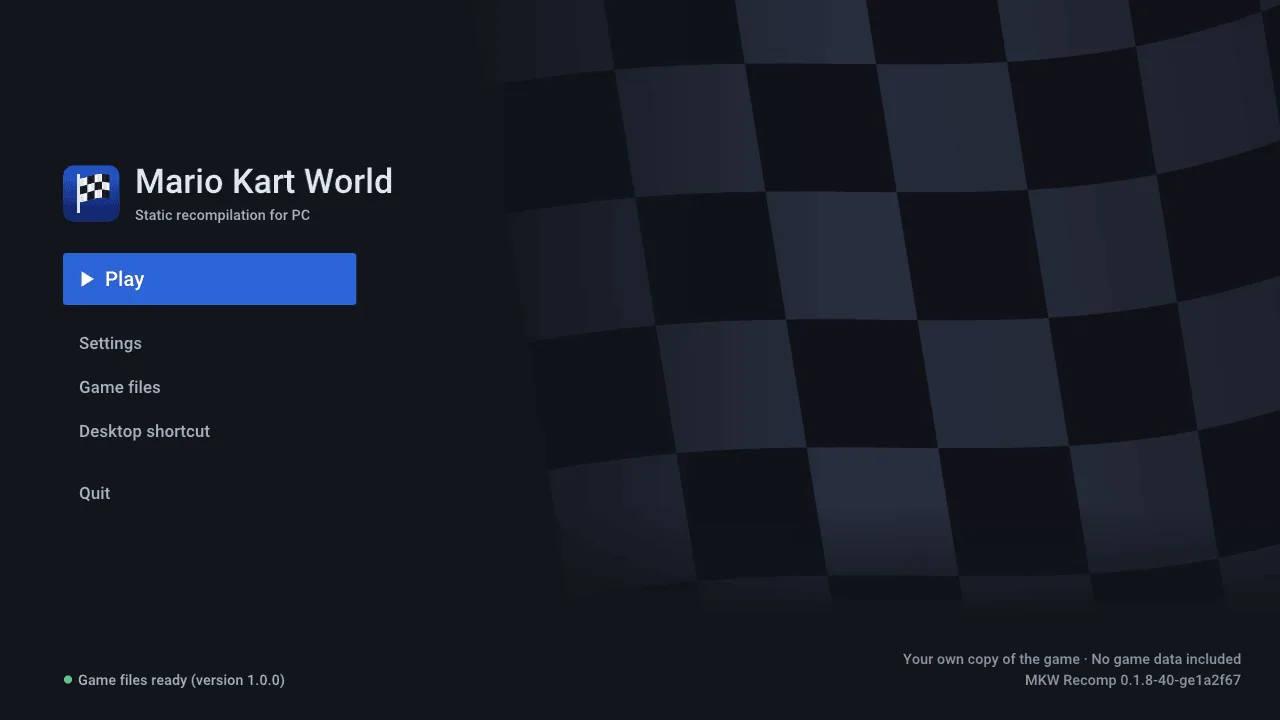
A new GitHub repository outlines an unofficial static recompilation project for Mario Kart World.

Key points
- An unofficial static recompilation project for Mario Kart World targets native PC execution.
- The project was published on GitHub by user adriadam10.
- The repository utilizes the C programming language and carries an MIT license.
The fan community around console reverse engineering has taken another surprising step forward. A developer going by the handle adriadam10 published a new repository on GitHub aiming to translate console code directly to personal computers1. Named mkw-recomp, the project targets Mario Kart World, a title for the Nintendo Switch 2, with the goal of turning it into a native PC application1. Instead of relying on traditional emulation layers that interpret console instructions in real time, this project belongs to an emerging trend of static recompilation efforts1.
Static recompilation works by parsing compiled machine code from a target platform and translating those instructions directly into standard executable code. When executed successfully, this technique can allow complex console titles to run on desktop computers without the heavy hardware overhead traditionally associated with software emulation. The announcement of mkw-recomp brings this method to a high-profile target platform, offering a fresh glimpse into how modern console software might be preserved and adapted outside original hardware ecosystems1.
While early projects of this nature often remain private during initial development, this initiative arrived directly on a public code repository1. Gamers and software enthusiasts can inspect the structure of the project as it develops1. The initiative highlights how rapidly independent developers attempt to analyze and translate modern console software, even as current hardware ecosystems remain active1.
Inside the mkw-recomp Repository
The repository published by user adriadam10 outlines specific technical choices for the mkw-recomp initiative1. The underlying codebase relies on the C programming language to facilitate the conversion process1. By using C as the intermediate layer, the project creates a structured bridge between raw console machine code and compiled desktop executables1. This choice allows developers to leverage standard compiler toolchains across multiple desktop platforms1.
Target platform support focuses on two major personal computer operating systems1. According to the project documentation, mkw-recomp is structured to produce native applications for both Linux and Windows environments1. Running natively on these systems means the resulting software does not require an underlying emulator interface or virtual machine layer to execute its logic on modern hardware1.
Distribution terms for the codebase are set under the permissive MIT software license1. This licensing choice permits users and outside contributors to inspect, modify, and redistribute the project source code1. However, as with similar static recompilation projects, the repository contains source code tools rather than copyrighted game assets, requiring users to supply their own legally obtained game files to generate a working executable1.
Context Around Mario Kart World and Recompilation
Mario Kart World stands as a key software title designed for the Nintendo Switch 2 console environment. As modern console hardware grows closer to standard computer architectures, the technical barrier between dedicated gaming consoles and personal computers shifts. Projects that focus on static recompilation attempt to parse binary files built for specific console hardware and recreate equivalent functionality on standard desktop architecture.
In recent years, community-driven recompilation efforts have targeted several classic console titles, providing enhanced performance, native widescreen resolution, and high frame rates on PC. Applying these techniques to modern titles designed for current hardware platforms presents a different set of technical challenges. Developers must reverse engineer intricate rendering pipelines, system calls, and file formats that are far more complex than those found in retro platforms.
The public availability of project frameworks on sites like GitHub allows multiple software engineers to examine standard library calls and rendering hooks. As static recompilation tools mature, they create structured documentation of how modern software interacts with console APIs, providing valuable insights for software preservationists and graphics programmers alike.
Practical Implications for Gamers
For everyday PC gamers and hardware enthusiasts, the launch of mkw-recomp represents a project to monitor rather than an immediate plug-and-play solution1. Because static recompilation requires matching reverse-engineered functions with underlying game logic, building a complete executable is an iterative process. Users interested in running Mario Kart World natively on Linux or Windows will need to track the repository for code updates, compilation guides, and dependency requirements1.
Anyone planning to try this project in the future must also remember the procedural requirements of native recompilation. Gamers will need access to a legitimate copy of Mario Kart World from the Nintendo Switch 2 to extract the necessary game assets and binary data1. Followers of the project should watch for progress updates regarding graphics rendering, audio subroutines, and input mapping within the repository logs1.
Apside's take
I have spent years following console preservation projects, and static recompilation never fails to fascinate me. Traditional emulation is great, but it essentially acts like an interpreter translating a foreign language in real time, consuming massive amounts of hardware power just to keep up. Static recompilation translates the whole book into native code beforehand. Seeing someone tackle a Nintendo Switch 2 title like Mario Kart World through this method gets my full attention1.
What catches my eye about mkw-recomp is the sheer transparency of doing this on GitHub under an MIT license1. Taking on modern console architecture using pure C code is a massive undertaking, and publishing it openly takes serious technical confidence1. Naturally, I wonder how far this project will get before running into major graphical or timing roadblocks, not to mention the legal scrutiny that usually follows high-profile projects linked to Nintendo systems.
I would love to see this project achieve stable asset loading and native rendering on both Windows and Linux1. Even if full playability takes time, the sheer technical accomplishment of natively executing modern console code on a standard desktop PC is something every tech-minded gamer should appreciate. I will be keeping this repository bookmarked to see how adriadam10 and potential contributors tackle the road ahead1.
Sources
- mkw-recomp: Static recompilation of Mario Kart World (Nintendo Switch 2) to a native PC programofficialGitHub: adriadam10/mkw-recomp

Comments
Sign in to comment and like