Hardware
Xbox Reveals Project Helix as a Next-Gen Console for PC Games
Microsoft details the next-generation Xbox Project Helix, emphasizing a design that plays PC games rather than acting as a traditional PC.

Key points
- Project Helix is described as a console capable of playing PC games, rather than a PC that plays console games.
- The system will provide instant access to four generations of Xbox libraries and game progress.
- Microsoft highlights the use of neural rendering to offset increasing costs and focuses on gameplay innovation.
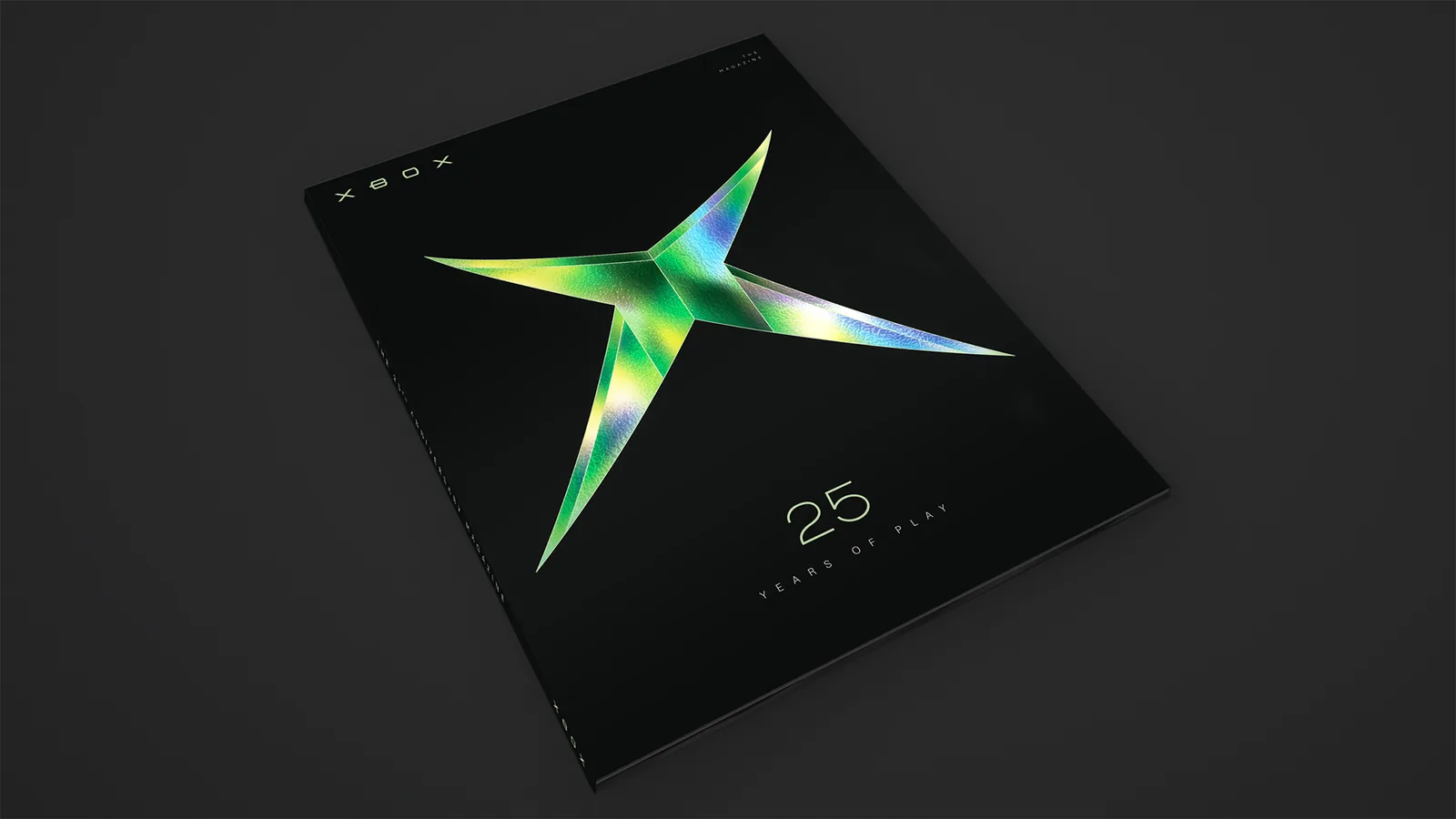
Microsoft has pulled back the curtain on its next hardware effort, designating the upcoming project under the codename Project Helix1. Detailed within the Xbox 25th Anniversary Magazine, the initiative marks the company's planned successor to the Xbox Series X|S family of consoles1. The hardware is not being framed as a routine refresh with slight component tweaks; instead, the project targets a complete rethink of how living room consoles interact with computer software libraries1.
At the center of this reveal is a distinct conceptual shift: Microsoft describes Project Helix as a dedicated console built to run PC games1. Rather than attempting to cram a traditional desktop operating environment into an under-the-television chassis, the engineering approach treats the machine as a streamlined console that can tap directly into games normally reserved for personal computers1.
Along with that PC-centric focus, the team is ensuring that existing players do not lose their historical digital footprints1. The machine promises instant access across four generations of Xbox libraries, complete with preserved player progression1. Combined with a design philosophy that steps away from chasing extreme display resolutions, Project Helix is shaping up as an unusual, targeted entry in hardware development1.
Hardware Built to Run PC Software
Details regarding the machine come directly from Jason Ronald, vice president of Xbox's gaming devices and ecosystem team, who outlined the guiding ethos behind Project Helix1. Ronald emphasized that the system is engineered from the ground up to be a console that plays PC games, explicitly drawing a line against the inverse concept of a PC that merely runs console software1. This phrasing underscores an intent to retain the straightforward stability of dedicated living room hardware while expanding the playable library to computer software1.
Backward compatibility stands as a core pillar of the architecture1. According to Ronald, players will be able to bring four generations of their existing Xbox software library directly to the new machine on day one1. This continuity includes preserved player progression, ensuring that save files, achievements, and long-standing profiles transfer without requiring users to abandon years of software purchases1.
The machine is explicitly presented as the successor to the Xbox Series X|S, aiming to serve as an ultimate gaming machine by tearing down the historical wall separating living room players from personal computer releases1. By bridging those two environments, the platform hopes to offer players the vastness of computer software options within an environment governed by console architecture1.
Prioritizing Neural Tech Over Spec Chasing
In a departure from typical hardware generational cycles, Microsoft is not anchoring the appeal of Project Helix to brute-force display metrics1. The hardware team has openly stated that targets like 8K resolution and ultra-high refresh rates are no longer the primary measures of generational progress1. Instead, the system prioritizes gameplay innovation and novel rendering techniques to deliver its next-generation presentation1.
Key to this design philosophy is the integration of neural rendering technology1. Modern game development faces ever-increasing production budgets, and hardware component manufacturing costs have climbed steadily1. Microsoft points to neural rendering as a vital technical mechanism to counter these financial pressures, using artificial intelligence inference to generate complex visual output without relying entirely on expensive, power-hungry silicon1.
This technological direction directly shapes how the hardware balances performance against cost1. By applying neural reconstruction methods, the system aims to keep manufacturing and purchase costs grounded while still enabling developers to deploy complex graphical scenes1. Shifting the burden away from sheer hardware muscle allows the engineering team to focus on foundational design features that support both PC execution and multi-generational backward compatibility1.
The Real Impact on Your Game Library
For everyday players, the most immediate consequence of Project Helix centers on library consolidation. Anyone who has split their time between a living room display and a desk rig knows the frustration of fragmented accounts, separate friend lists, and disconnected save files. A console capable of playing PC titles while retaining four generations of existing console software could change how players buy and store their collections. Gamers invested in historic console catalogs do not have to worry about a hard software reset, which has often soured the transition to new hardware generations.
What players must watch closely is how the software execution layer actually behaves in everyday conditions. Playing PC games within a console environment raises immediate questions about input methods, user interfaces, and store permissions. Console players expect zero-configuration setups: you press power, select a title from a tile grid, and play with a gamepad in hand. If Project Helix manages to deliver PC-level software breadth while maintaining that straightforward console flow, it will solve one of the longest-standing headaches in modern digital gaming.
Apside's take
I have been following console transitions since the days when every new machine arrived with an entirely clean slate and threw all your old cartridges into obsolescence. Seeing Microsoft publicly commit to carrying forward four generations of libraries and save data on Project Helix makes me genuinely happy. There is a deep, quiet comfort in knowing that the games and save states I invested dozens of hours into years ago are not being left behind in a dusty bin. Too many hardware transitions treat old software as disposable trash, so seeing multi-generational continuity treated as a core design pillar is a massive win for game preservation.
At the same time, I look at the phrase "neural rendering" with a healthy dose of skepticism. We have seen plenty of reconstruction techniques across modern graphics cards, and while they can be impressive, they can also introduce ghosting, soft textures, and odd motion artifacts when pushed too hard. If hardware makers lean on artificial intelligence models purely to cut hardware costs and avoid putting real silicon muscle into the box, I worry that visual clarity and frame timing could suffer. A machine designed to play PC games needs crisp responsiveness, not a smeary, upscaled image trying to hide an underpowered graphics processor.
What I want out of Project Helix is very simple: true plug-and-play convenience paired with an open library. If this machine forces me to manage driver updates, battle third-party launchers, or fiddle with graphics menus using an analog stick cursor, the console magic vanishes instantly. Give me a snappy interface, full gamepad support across every title, and an honest preservation of my backlog. If Microsoft can actually deliver a pure console experience that just happens to open the door to computer titles, count me fully on board.
Sources
- Xbox 25th Anniversary MagazineofficialXbox Wire


Comments
Sign in to comment and like